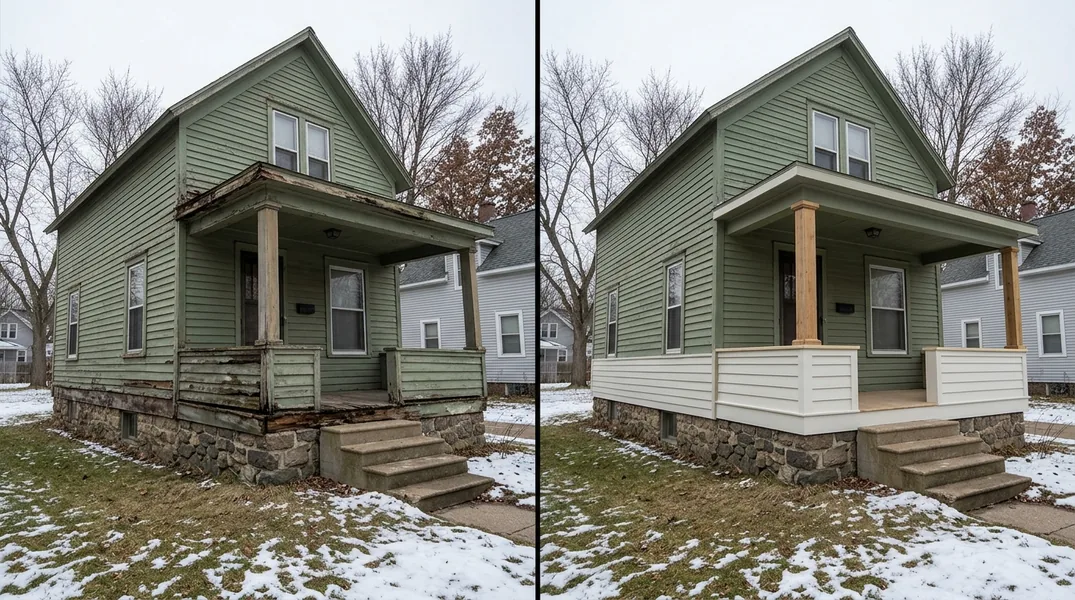
The Perfect Storm: Why Grand Rapids Winters Create Wood Rot
Grand Rapids experiences one of the most punishing winter climates in the Midwest, and your home's wooden structures pay the price. The combination of heavy snowfall, freeze-thaw cycles, and rapid temperature swings creates ideal conditions for wood rot to develop and spread. Unlike a dry climate where wood simply stays dry, our region forces moisture deep into fascia boards, soffits, and roof edges repeatedly throughout the season.
When snow accumulates on your roof and temperatures fluctuate between freezing and thawing, water doesn't just melt away cleanly. Instead, it backs up under shingles, seeps into gaps, and saturates the wood framing beneath. This moisture then refreezes, expands, and cracks the protective paint or stain. Once the wood's protective barrier fails, fungal spores that thrive in damp conditions begin colonizing the fibers. Within a single winter season, this cycle can advance wood rot from invisible to structurally significant.
Ice Dams: The Hidden Culprit Behind Fascia Rot Repair Needs
Ice dams form when warm air from your attic melts snow on the roof, but the water refreezes at the cold eaves where there's no heat source. This creates a dam that forces meltwater to back up under the roofing material and into the fascia boards, soffits, and even interior walls. In Grand Rapids, ice dam formation is nearly guaranteed during our typical winters, making fascia rot repair one of the most common carpentry issues we encounter.
The damage from ice dams isn't always immediately visible. Water can sit behind your fascia for weeks, gradually softening the wood and creating an environment where dry rot fungi flourish. By the time you notice peeling paint, sagging gutters, or soft spots in the fascia, the wood may already be significantly compromised. This is why homeowners often discover they need Wood Rot & Dry Rot Repair only after an ice dam has done its damage. The longer the moisture sits, the deeper the rot penetrates, potentially affecting roof decking, rafter tails, and even structural beams.
How Snowmelt Accelerates Dry Rot in Wooden Structures
Dry rot is a misnomer that confuses many homeowners. The condition actually requires moisture to develop, which makes our snowy winters particularly problematic. When snow melts rapidly (as happens during our spring warm spells), enormous volumes of water pour off roofs and collect around foundation perimeters, in crawl spaces, and along basement walls. This water wicks up into wooden sill plates, rim joists, and other structural components that are vulnerable to fungal attack.
What makes dry rot especially dangerous is that it can progress silently for years. Unlike surface wood rot, which may be visible as discoloration or soft spots, dry rot often works from the inside out. The fungus digests the wood's cellulose, leaving a honeycomb of empty space behind a seemingly solid exterior. A board that looks fine can suddenly crumble under pressure. This is why professional inspection is critical for any dry rot repair in Grand Rapids. A carpenter trained to recognize the early signs can catch the problem before it reaches your home's load-bearing structure.
Vulnerable Areas: Where Winter Damage Strikes First
Certain areas of your home are far more susceptible to ice dam damage and snowmelt rot than others. Fascia boards and soffits are the obvious targets, as they form the perimeter where water naturally concentrates. But the damage extends far beyond what you can see from the ground. Roof decking, rafter tails, and the rim joists where your upper floor meets exterior walls all absorb water during freeze-thaw cycles. Attic framing can also be affected if your roof insulation is insufficient, allowing heat to melt snow unevenly.
Gutter systems and downspout connections represent another critical vulnerability. Clogged gutters prevent water from draining, forcing it to back up and soak into fascia and soffit materials. If your downspouts don't direct water at least four to six feet away from your foundation, that water will collect at ground level and wick upward into sill plates and basement walls. Crawl spaces and basement walls are particularly prone to moisture problems after heavy snowmelt, creating conditions perfect for structural wood rot. This is why comprehensive inspection of these hidden areas is essential before minor rot becomes a major structural problem requiring Floor Joist & Subfloor Repair.
Prevention Strategies for Grand Rapids Homeowners
The best approach to wood rot is prevention. Proper attic ventilation and insulation are your first line of defense against ice dam formation. Your attic should be cold and well-ventilated so that roof temperatures stay below freezing, preventing the melt-refreeze cycle that creates dams. Ensure that soffit vents are clear and that ridge vents (if installed) aren't blocked by insulation. Many older homes in Grand Rapids lack adequate ventilation, making them particularly vulnerable to winter moisture problems.
Regular gutter maintenance is equally important. Clean gutters and downspouts at least twice yearly, and more frequently if you have overhanging trees. Consider installing gutter guards to reduce debris accumulation. After heavy snow events, safely remove snow from your roof edge to prevent ice dam formation. Inspect your fascia, soffits, and roof edges annually for signs of paint failure, soft wood, or water staining. If you notice any of these warning signs, schedule a professional inspection promptly. Addressing small rot early prevents expensive repairs later.
Wood Rot & Dry Rot Repair Near Me: When to Call Grand Rapids Carpentry
If you've discovered soft spots in your fascia, visible wood rot, or signs of water damage around your roofline, it's time to call in professionals. DIY repairs rarely address the full extent of hidden rot, and improper repairs can allow the problem to worsen. Grand Rapids Carpentry specializes in identifying and repairing ice dam damage, fascia rot, and structural wood rot throughout the region. We use proven techniques to remove damaged wood, treat affected areas, and install durable replacement materials that withstand our harsh winters.
Our team understands the specific challenges that wood rot repair in Grand Rapids presents. We inspect not just the visible damage but also the surrounding areas where rot may be spreading invisibly. We can provide you with a detailed free estimate and explain exactly what repairs are needed and why. Don't let winter damage compromise your home's structural integrity. Contact us today at (616) 504-6094 to schedule an inspection and protect your investment.
Looking for a professional carpentry contractor in Grand Rapids? Grand Rapids Carpentry responds fast for all your carpentry needs.
Get a Free QuoteOur services: Wood Rot & Dry Rot Repair · Termite Damage Repair · Floor Joist & Subfloor Repair