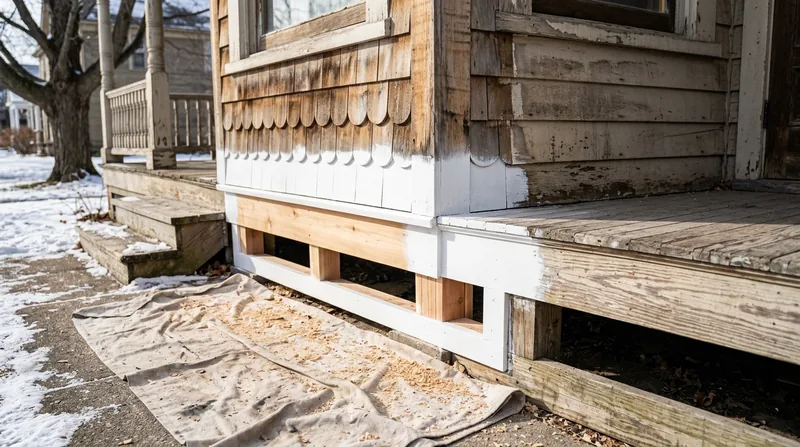




Grand Rapids sits in the lake-effect snow belt, where winter ice dams and spring snowmelt are the primary drivers of wood damage across the city. From the century-old Greek Revival and Italianate homes on Heritage Hill to the 1950s ranches in Kentwood and Wyoming, freeze-thaw cycles soak fascia, sills, porch floors and the bottom courses of siding year after year. We provide wood rot and dry rot repair in Grand Rapids by removing rotted wood back to solid stock, treating surrounding boards and rebuilding with rot-resistant lumber. Most rot we encounter starts at the water line, where snow sits against the house and melt seeps into the framing. The same carpenters who do the work explain the pathology, propose repair before replacement whenever the wood justifies it, and document damage for insurance claims. Call us at (616) 504-6094 for a free, no-obligation estimate, or visit our contact page to request one online.
Why Wood Rot Matters in Grand Rapids: Ice Dams, Snowmelt and Aging Framing
Grand Rapids' residential stock is predominantly pre-1980 wood-frame construction sitting on sloping terrain above the Grand River. Lake-effect snow accumulates heavily, and ice dams trap meltwater against the house for weeks. This standing water penetrates fascia, sills, rim joists and the first course of exterior framing, where freeze-thaw cycles accelerate decay. Carpenter ants follow moisture, and humid summers feed ongoing rot even after snow melts. The longer rotted wood sits untreated, the deeper it spreads into structural members, and the more expensive the repair becomes.
- Ice dams trap snowmelt against fascia, soffits and sill plates, creating a slow soak that opens the wood to rot.
- Freeze-thaw cycles crack soft spots wider, accelerating decay through the winter and into spring.
- Carpenter ants colonize damp framing, compounding structural damage alongside the rotted wood.
- Delayed repair allows rot to migrate from trim into rim joists, floor joists and load-bearing walls.
Catching rot early and addressing it promptly keeps repair costs down and preserves the structural integrity of your home.
Key info: In East Grand Rapids and the neighborhoods around Wealthy Avenue, 1920s Tudor and foursquare homes often show rot first at the brick-to-wood junction where sills meet exterior walls. We remove the rotted wood, treat the surrounding stock and rebuild the sill in rot-resistant redwood or Douglas fir, restoring both weathertightness and appearance.
For guidance on permits and inspection requirements in your area, contact the City of Grand Rapids Building Department.
How We Repair Wood Rot and Dry Rot in Grand Rapids
Our process begins with a site visit to identify the extent of decay, trace moisture sources and determine whether repair or replacement is the honest answer. We remove rotted wood back to solid, healthy stock, treat the surrounding boards with a water-repellent preservative and rebuild with rot-resistant lumber. For structural members like rim joists or floor joists, we may sister new framing alongside the existing member or replace it entirely, depending on the damage. We work methodically to minimize disruption and restore both function and finish. See our floor joist and subfloor repair page for details on structural rot repair.
- Inspect the affected wood and trace the moisture source, whether ice dam, gutter failure or interior leak.
- Remove all soft, rotted wood back to solid stock, using chisels, saws and pry bars to expose the full extent of decay.
- Treat the surrounding boards with a water-repellent preservative to inhibit further rot.
- Rebuild the removed section with rot-resistant lumber, fastening it securely to the existing framing.
- Seal all joints and end grain to prevent moisture reentry and ensure a weathertight finish.
The repair is complete when the wood is solid, the moisture source is addressed and the surrounding stock is protected.
Example: A porch floor in Wyoming showed soft spots at the rim joist where winter melt had seeped under the rim band. We removed 18 inches of rotted rim joist, sistered a new pressure-treated member alongside the existing one and rebuilt the porch band in rot-resistant redwood. The porch is now solid, the rot is stopped and the homeowner avoided a full floor replacement.
Wood Rot Repair Methods and When to Use Each
| Approach | Description | Best for |
|---|---|---|
| Localized removal and rebuild | Remove rotted section back to solid wood, treat surrounding stock and rebuild with rot-resistant lumber. | Fascia, sills, soffits and trim where rot is confined to a single board or section. |
| Sistering | Fasten a new structural member alongside the existing rotted or weakened joist or beam to share the load. | Floor joists, rim joists and beams where structural integrity is compromised but the existing member is not fully removed. |
| Full member replacement | Remove the entire rotted joist, rim joist or beam and install a new rot-resistant member in its place. | Load-bearing framing where rot has compromised more than half the member or where sistering is not feasible. |
| Moisture remediation and preventive treatment | Address gutter failures, ice dam buildup or interior leaks and apply water-repellent preservative to at-risk wood. | Preventing future rot in areas prone to water intrusion, such as sills, fascia and porch framing. |
Wood Rot and Dry Rot Repair Cost in Grand Rapids: What to Expect
The cost of wood rot repair in Grand Rapids depends on the location of the rot, the extent of decay, accessibility and whether the repair involves structural framing or trim. Small, localized repairs to fascia, sills or porch trim start at $650 and may run higher if the rot has spread into framing or if access requires scaffolding. Structural repairs such as rim joist or floor joist sistering or replacement are typically more involved and priced on a per-job basis after an on-site inspection. We recommend getting 2 to 3 estimates so you understand what the work entails and why the price varies. Visit our pricing page for a detailed breakdown of typical costs and factors that affect the final quote.
Factors that move the price include the width and depth of rot, whether the damaged wood is structural or cosmetic, the lumber species used for rebuilding and whether the repair is urgent or can be scheduled during normal business hours. A small porch floor rot in Grandville might cost $1,200 to $2,000, while a rim joist repair spanning 20 feet in a historic home on Heritage Hill could run $3,500 to $6,000 or more. Structural work sometimes requires a permit and possibly a licensed structural engineer's input, which we will discuss during the estimate. Call (616) 504-6094 for a free estimate, and we will provide a realistic range based on what we see on site.
Wood Rot and Dry Rot Repair Near Me: What Grand Rapids Homeowners Should Know When Hiring a Carpenter
When you are looking for a carpenter to repair wood rot near Grand Rapids, focus on experience with structural and exterior carpentry, not just finish work. Ask whether the same crew that estimates the job will do the actual repair, because consistency and accountability matter. Request references from recent rot repair projects and ask those homeowners whether the work held up and whether the carpenter explained what caused the rot in the first place. Check that the contractor is fully insured and can provide proof of coverage. For work that alters a load-bearing wall or adds significant framing, confirm that a permit is required and that your contractor is comfortable working with a licensed structural engineer and your local building department. Some neighborhoods in Grand Rapids, particularly Heritage Hill and the historic districts, have HOA or architectural review requirements, so verify those before you commit.
- Verify that the contractor is fully insured with current general liability and workers compensation coverage.
- Request at least two references from wood rot or structural repair projects completed in the past 18 months.
- Ask whether permits are required for your specific repair and whether the contractor has experience navigating your local building department.
- Get a written estimate that details what wood will be removed, what lumber will be used and how the repair will be sealed and finished.
- Confirm that the same crew that inspects the job will perform the repair, so there is continuity and accountability.
A reputable local carpenter will answer your questions directly, stand behind the work and help you understand why the rot happened so you can prevent it in the future. Contact us at our contact page to request a free estimate and speak with a carpenter who knows Grand Rapids homes inside out.
Wood Rot & Dry Rot Repair in Grand Rapids: Pricing Guide
| Service | Price | Details |
|---|---|---|
| Small fascia, sill or trim rot repair | Starting at $650 | Localized decay removal and rebuild in one board or section, includes preservative treatment and finish |
| Porch floor or rim joist repair | Starting at $1,200 | Removal and rebuild of soft spots in porch framing or rim joist; sistering or partial replacement depending on extent |
| Structural joist or beam repair | On estimate | Load-bearing member sistering or replacement requires site inspection to assess depth of rot and structural impact |
| Multi-area rot repair or prevention package | On estimate | Fascia, soffit and sill work combined with gutter evaluation and preventive treatment across multiple zones |
| Travel and estimate | Free within service area | No mileage fees or call-out charges in Grand Rapids and surrounding communities; response within 24 hours |
Indicative pricing, the exact cost depends on square footage, finish, and site access. Free personalized estimate within 24h at (616) 504-6094.


