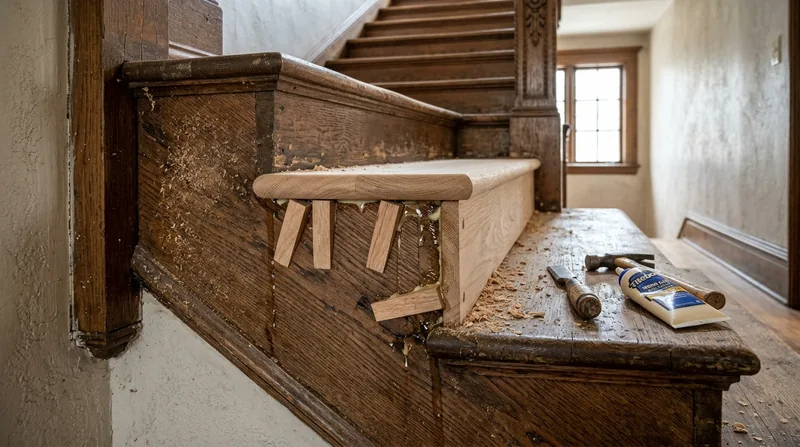




Staircases take a beating in Grand Rapids homes, especially across the Heritage Hill district and older neighborhoods where wooden treads and stringers have been in service for over a century. Freeze-thaw cycles, humidity swings, and the weight of daily use all work against stair integrity. Stair and railing repair in Grand Rapids ranges from tightening loose balusters and replacing creaking treads to rebuilding entire stringers and modernizing railings to meet current code. Whether you own a Victorian foursquare in East Hills, a 1920s bungalow in Eastown, or a 1950s ranch in Kentwood, stairs and railings eventually show their age. We repair staircases and railings of every era, restore period details where they matter, and add or upgrade handrails that work with your home's character and meet safety standards. A free estimate takes about 15 minutes and costs nothing.
Why Stair and Railing Repair Matters in Grand Rapids Homes
Grand Rapids sits in a lake-effect snow belt with long winters, hard freeze-thaw cycles, and humidity swings that stress wood at the cellular level. Stairs absorb seasonal moisture and temperature change unevenly, causing stringers to warp, treads to cup and crack, and fasteners to loosen. Balusters and handrails take impact load and vibration that compounds over time. A staircase that creaks or feels loose underfoot is not just annoying; it signals that fasteners are failing and wood fibers are moving independently. Left unaddressed, a compromised stair becomes a liability and a safety risk.
- Creaking treads and loose stringers develop when seasonal wood movement opens joints and fasteners lose grip.
- Wobbly balusters and handrails fail because fasteners corrode or wood around the attachment point deteriorates.
- Rotted stringers and treads occur where water pools on horizontal surfaces or ice dams feed moisture into the stair structure.
- Worn nosings and risers become trip hazards and expose the end grain of treads to accelerated decay.
- Period railings in Heritage Hill and Eastown homes often lack code-compliant handrails, creating both a safety gap and a compliance issue for resale.
We address each of these pathologies directly, reinforcing loose connections, replacing rotted wood where it cannot be saved, and upgrading railings to current code without erasing the character of your home.
Key info: Stair and railing work that alters the structure or changes handrail height and spacing commonly requires a building permit in Grand Rapids. Check with your local building department to understand permit thresholds for your specific project. We work with permit requirements and can help document the scope for your application.
How We Repair Stairs and Railings in Grand Rapids
Every stair and railing job starts with a careful walk-through. We identify which components are sound and which need repair or replacement, then explain the most cost-effective path forward. A creaking tread often tightens with better fastening; a rotted one needs replacement. A loose baluster may just need resetting; if the wood is punky, we replace it. We work from the assumption that repair beats replacement whenever the wood justifies it, and we say plainly when it does not.
- We inspect the entire stair assembly, including stringers, treads, risers, balusters, newel posts, and handrails, looking for movement, rot, loose fasteners, and code gaps.
- We identify which repairs are structural (stringers, treads, handrails) and which are cosmetic or code-driven (baluster spacing, handrail height, nosing wear).
- We tighten loose connections with new fasteners, reinforce soft wood with epoxy consolidant where appropriate, or sister in new structural members where the original is compromised.
- We replace treads and risers that are rotted or unsafe, match species and finish to the existing staircase where visible, and scribing and fit each piece for a tight, lasting joint.
- We upgrade or add handrails to meet current code, integrating them into the existing balustrade without removing period details that give the staircase character.
- We test every connection and verify that the finished staircase is safe, quiet, and stable under load.
A typical staircase repair in a Creston or Belknap Lookout home takes one to three days depending on scope. We work around your schedule and leave the staircase clean and ready to use when we finish.
Local example: A 1910 Arts and Crafts home in Heritage Hill had a main staircase with creaking treads and a loose newel post. We reinforced the stringer connections, replaced two rotted treads with Douglas fir to match the original, and reset the newel post with new fasteners and shims. The staircase is now solid and quiet. The owners kept the original finish and period balusters, which is what makes the work worth doing right.
Stair and Railing Repair Methods and Materials
| Repair Approach | What It Involves | Best For |
|---|---|---|
| Fastener reinforcement | Remove old fasteners, clean out holes, install new lag bolts, screws, or dowels with epoxy to lock joints tight. | Creaking treads, loose balusters, wobbly handrails, and loose newel posts where wood is sound. |
| Wood consolidation and repair | Apply epoxy consolidant to soft wood fibers, allow cure, then sand and seal to restore load-bearing capacity. | Early-stage rot in stringers, treads, or balusters where the damage is localized and the member is otherwise sound. |
| Tread and riser replacement | Remove damaged treads or risers, cut and fit new stock in matching species, install with fasteners and glue, sand and finish. | Rotted or unsafe treads, worn nosings, cracked risers, and stairs where the stringer is solid but the walking surface is compromised. |
| Stringer repair or replacement | Sister new stock alongside a rotted or cracked stringer, or replace the entire member if damage is severe and the stairs are cantilevered or open. | Structural rot in stringers, severe deflection or sagging, and stairs that feel unsafe underfoot despite surface repairs. |
| Handrail upgrade or installation | Add or upgrade a handrail to meet current code (1.25 to 1.5 inches diameter, 34 to 38 inches high, brackets every 4 feet). | Staircases with no handrail, period railings that lack a graspable rail, and resale or accessibility compliance. |
Stair and Railing Repair Cost in Grand Rapids: What to Expect
The cost of stair and railing repair in Grand Rapids depends on what is wrong, how many treads or balusters are involved, and whether the stringer itself needs attention. A simple tightening of loose balusters or fasteners starts around $600 to $800. Replacing one or two treads typically runs $1,200 to $2,000. A full stringer repair or replacement, or a complete handrail upgrade, can run $2,500 to $5,000 or more depending on the staircase size and finish level. Older homes in Heritage Hill or East Hills may require custom matching of species and finish, which adds cost but preserves character.
Factors that move the price include the number of treads and balusters affected, whether rot has compromised the stringers or just the walking surface, the species of wood and finish you want, and whether the job requires a permit. Access to the staircase also matters: a basement or basement staircase is often faster than an interior main stair with drywall and finishes around it. We always provide a detailed estimate before starting work, and we can help you understand what each line item covers and why it costs what it does. For a complete picture of pricing across our carpentry services, visit our pricing page.
The best way to know what your stair repair will cost is to get it looked at in person. Contact us for a free estimate at (616) 504-6094. We respond within 24 hours and there is no obligation to book.
Stair and Railing Repair Near Me: What Grand Rapids Homeowners Should Know When Hiring a Carpenter
Hiring a carpenter for stair and railing repair means finding someone who understands both the structural and cosmetic sides of the work, who can diagnose what is actually wrong rather than guess, and who will give you honest advice on repair versus replacement. A good contractor will walk you through the problem, show you the damage, explain why it happened, and give you realistic options with pricing before you commit. They should be fully insured and able to provide references from recent work in your area. If your stairs are in a historic district or your home is subject to HOA architectural review, confirm that your contractor understands those requirements and can work within them.
Get at least two or three estimates from different contractors. A low estimate is not always a sign of a good deal; it often means the contractor did not spend enough time diagnosing the problem or is planning to cut corners. Ask each contractor what they would do and why. Ask for references from homeowners in Grand Rapids, East Grand Rapids, Kentwood, or Wyoming who have had similar work done. If your stairs need a permit, make sure your contractor is willing to work with the permitting process and can explain what will be inspected and why. Permits exist to keep your home safe and your resale value intact, not to create hassle.
We have been repairing stairs and railings in Grand Rapids and surrounding areas since 2016. We explain the problem plainly, propose repair before replacement, and do the work the same way every time. Call (616) 504-6094 for a free, no-obligation estimate, or reach out online to schedule a walk-through.
Stair & Railing Repair in Grand Rapids: Pricing Guide
| Service | Price | Details |
|---|---|---|
| Baluster and fastener tightening | Starting at $600 | Includes inspection, loose fastener removal and replacement, and testing; add cost if wood consolidation is needed |
| Single or double tread replacement | Starting at $1,200 | Includes tread removal, new stock cut and fit to match existing staircase, installation with fasteners and glue, sanding and finish |
| Stringer repair or reinforcement | Starting at $2,000 | Includes assessment of rot or deflection, sistering or consolidation, new fasteners, and structural testing; full replacement costs more |
| Handrail upgrade or new installation | Starting at $1,500 | Includes new rail stock, brackets, fasteners, and finishing; cost varies with rail length, species, and integration with existing balusters |
| Travel and estimates | Free | No charge for travel within Grand Rapids and surrounding service areas; estimates provided within 24 hours, no obligation to book |
Indicative pricing, the exact cost depends on square footage, finish, and site access. Free personalized estimate within 24h at (616) 504-6094.


