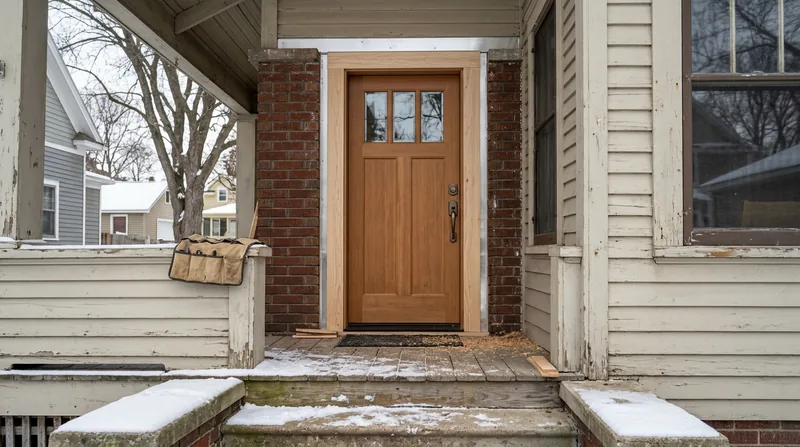




An entry door in Grand Rapids faces real punishment: lake-effect snow piling against the frame, subzero wind driving moisture into the jamb, and sticky summer humidity that swells wood and rots thresholds from the inside out. Exterior and entry door installation in West Michigan isn't just about picking a new door off a shelf. It's about understanding how freeze-thaw cycles crack frames, how ice dams back water into door wells, and how the old wood in Heritage Hill Victorians or 1950s ranches in Kentwood needs careful handling before you hang anything new. We rebuild rotted frames and thresholds, or replace the whole unit with entry, back, or French doors set tight, sealed, and ready for the climate that actually lives here.
Why Entry Door Frames Fail in Grand Rapids: The Real Culprits
Grand Rapids sits in the lake-effect snow belt with long snowy winters, hard freeze-thaw cycles, and humid summers. That combination attacks door frames relentlessly. Water backs up behind exterior trim during spring snowmelt, ice dams force moisture into the jamb, and summer humidity keeps the wood damp enough for rot to advance. Older homes built before 1978 on the Hill or in East Hills often have original wood frames that have aged out, and even newer construction can develop rot if water management fails around the threshold or sill.
- Ice dams and snowmelt force water behind exterior trim and into the door well, rotting the threshold and lower jamb over winter.
- Freeze-thaw cycles crack the caulk seal and warp the frame, allowing air and water infiltration that feeds rot inside the jamb.
- Humid summers and poor drainage around the foundation keep the sill plate damp, accelerating wood decay in the framing below.
- Original wood on historic homes in Heritage Hill and Eastown has simply aged past the point where repair is practical.
- Poor flashing or missing sill pan installation lets water run straight into the wall cavity instead of out to the grade.
When a door frame rots, you lose the weathertight seal, air infiltration climbs, and the structural support for the door unit fails. Catching it early and repairing or replacing the damaged wood keeps your heating bills down and stops water from moving into the wall cavity and subfloor.
Key info: A rotted threshold or lower jamb in a 1920s Italianate on the Hill or a 1970s split-level in Wyoming can often be repaired by sistering in new wood and resealing, keeping the original door unit in place. Full replacement is the honest answer when rot has moved into the frame studs or when the sill plate is soft.
For guidance on what your local building department requires for exterior door work, check with the City of Grand Rapids building and zoning department or your township office. Permits are often required for structural alterations or when working on protected historic properties.
How We Install and Repair Entry Doors in Grand Rapids
Our process starts with a hard look at what's actually wrong. If the frame is sound but the door seal has failed, we re-caulk, re-flash, and reseal. If wood rot has moved into the jamb or threshold, we cut out the soft wood, sister in new pressure-treated or rot-resistant stock, and seal everything tight. If the whole unit needs replacement, we remove the old door, inspect the framing for hidden rot, install a new entry door with a proper sill pan, flash it correctly, and seal it for West Michigan weather.
- We inspect the existing frame and threshold for rot, checking the sill plate and rim joist with a moisture meter and awl.
- We remove the door unit carefully, preserving the trim and casing if it's salvageable or if the home is historic.
- We cut out all soft or compromised wood and sister in new framing material, fastening it securely to the existing structure.
- We install a proper sill pan and flashing to direct water out and away from the wall cavity and foundation.
- We hang the new door unit plumb and square, shim it tight, and seal all gaps with exterior-grade caulk and foam.
- We install or restore exterior trim, casing, and threshold, finishing everything to match the existing work.
The key is getting the water management right. A door installed without proper flashing or sill pan will rot again in five years, no matter how good the door itself is.
Example: A 1960s ranch in Wyoming had a rotted threshold and lower jamb on the back door. We cut out the soft wood, sistered in pressure-treated 2x material, installed a new sill pan, hung a solid-core exterior door, and sealed everything with exterior caulk and trim. Total time: one day. The homeowner kept the existing door opening size and wall structure intact, and the door now sheds water properly. See our wood rot repair page for more on how we approach rot in framing.
Entry Door Installation Methods and Materials
| Approach | Description | Best For |
|---|---|---|
| Repair and Reseal | Cut out rotted wood in the threshold or lower jamb, sister in new pressure-treated stock, re-flash, and re-caulk the entire perimeter with exterior-grade sealant. | Doors with sound frames where rot is limited to the threshold or lower jamb; historic homes where preserving the original opening is important. |
| Frame Replacement | Remove the door unit and all rotted framing, rebuild the jamb and sill with new wood or composite material, install a sill pan and flashing, and hang a new door unit. | Frames where rot has moved into the studs or sill plate; doors with failed seals that have allowed water into the wall cavity. |
| Full Unit Replacement | Remove the entire door assembly, inspect and repair the rough opening, install a new pre-hung entry door with integral sill pan and flashing, shim, seal, and trim. | New construction, major renovations, or when the existing frame is compromised beyond practical repair. |
| French or Specialty Doors | Install multi-light or French-style doors with the same flashing and sealing standards as a standard entry door, ensuring proper water management and air sealing. | Homeowners who want more light or a specific aesthetic; back doors or side entries where a French door adds value. |
Exterior and Entry Door Installation Cost in Grand Rapids: What to Expect
Entry door work in Grand Rapids typically starts at $850 for repair and climbs based on what you actually need. A simple reseal or threshold patch on an existing door runs lower. Sistering in new wood and re-flashing a rotted frame runs $1,200 to $2,000. A full door replacement with new frame, sill pan, flashing, trim, and finish can land anywhere from $1,800 to $3,500, depending on the door quality, the size of the opening, and how much hidden rot you find once you start cutting.
The biggest cost drivers are the extent of rot (does it stop at the threshold or has it moved into the studs?), access (is the door easy to reach or does it sit in a tight entryway?), and the door itself (a solid-core or fiberglass door costs more than a hollow-core, but it insulates better and lasts longer in West Michigan weather). Getting 2 or 3 estimates from local carpenters is smart because every house is different, and the only way to know what's hiding behind the trim is to look.
See our full pricing page for a breakdown of typical costs and what affects them. We give free estimates within 24 hours, no obligation to book. Call (616) 504-6094 to schedule a look at your door.
What to Look For When Hiring a Carpentry Contractor Near Me in Grand Rapids
Finding the right carpenter for your entry door work matters. You want someone who understands West Michigan weather, knows how to flash and seal properly so water doesn't come back three years later, and can explain what they're doing in plain language. Here's what to check before you hire.
- Confirm the contractor is fully insured with liability and workers compensation coverage, and ask to see a certificate.
- Get 2 or 3 written estimates that break down labor, materials, and any permits or inspections required by your township or city.
- Ask for references from recent door or frame work in Grand Rapids, East Grand Rapids, Kentwood, or nearby areas, and call at least one.
- Check whether a permit is required for your job by contacting your local building department, and hire someone who understands the process.
- If your home is in a historic district like Heritage Hill, verify that your contractor understands preservation standards and can match existing trim and materials.
- Ask how they handle water management and flashing, since that's the difference between a door that lasts 20 years and one that rots in 5.
A good local carpenter will walk you through what they find, explain why a repair or replacement makes sense, and answer your questions without pressure. If someone quotes you over the phone without seeing the job, find someone else.
Ready to get started? Contact us for a free estimate, or call (616) 504-6094. We've been doing residential carpentry in Grand Rapids since 2016, and we work across the city and surrounding areas including Cascade, Ada, Byron Center, and Hudsonville.
Exterior & Entry Door Installation in Grand Rapids: Pricing Guide
| Service | Price | Details |
|---|---|---|
| Threshold or lower jamb repair | Starting at $850 | Cut out soft wood, sister in new material, re-flash and re-seal existing door unit in place |
| Full frame replacement with new door | Starting at $1,800 | Remove old unit, rebuild frame and sill, install new entry door with proper flashing and trim |
| French or specialty door installation | Starting at $2,000 | Multi-light or custom door with same flashing and sealing standards as standard entry door |
| Hidden rot or structural damage found during work | On estimate | Extent of rot in studs or sill plate determines scope; discovered only after opening the wall |
| Travel and site visit | Included | No separate call-out fee within Grand Rapids and surrounding service areas |
| Free estimate | No charge | Response within 24 hours at (616) 504-6094; no obligation to hire us after the walk-through |
Indicative pricing, the exact cost depends on square footage, finish, and site access. Free personalized estimate within 24h at (616) 504-6094.


