Understanding Ice Dams and Winter Water Damage
Winter in Grand Rapids brings beautiful snow, but it also brings a serious threat to your home's structural integrity: ice dams. An ice dam forms when snow on your roof melts due to heat escaping from your attic, then refreezes at the colder edges of your roof. This creates a barrier that traps water, forcing it to back up under your shingles and into your home.
Ice dam damage typically affects your roof's edge, gutters, and fascia board. Water seeps into these areas and can travel down into your walls, attic, and even into the interior of your home. The damage pattern is usually linear, following the roofline, and occurs most heavily on the north and east sides of your home where temperatures stay coldest. If you notice water stains on your ceiling, wet insulation in your attic, or peeling paint on your soffit and fascia during winter or early spring, ice dams are likely the culprit.
What Does Dry Rot Look Like: Identifying the Signs
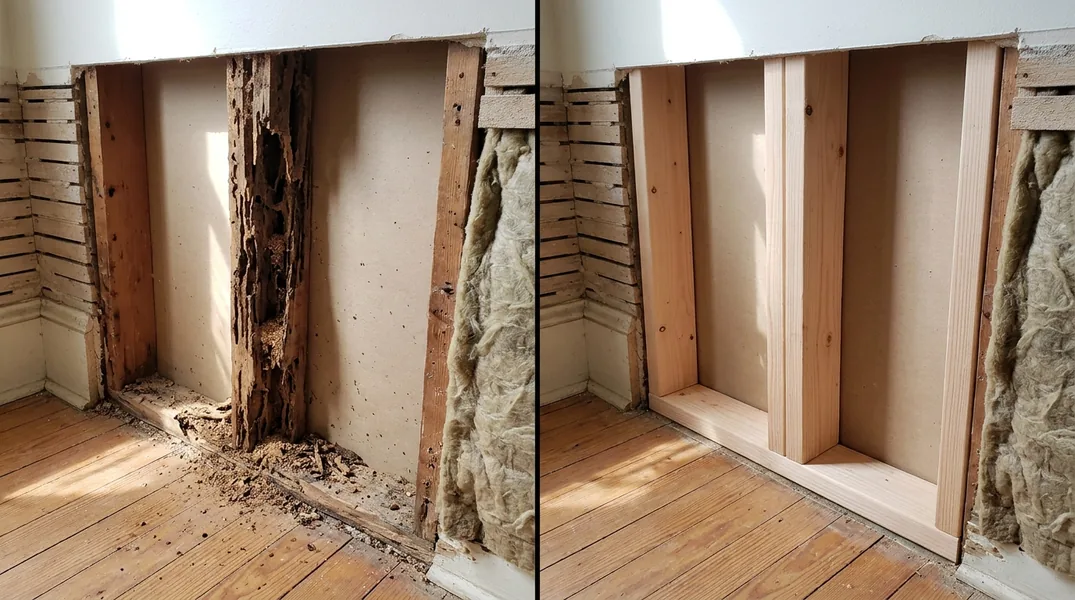
Dry rot is a fungal decay that eats away at wood from the inside out, and it looks distinctly different from water damage caused by ice dams. When you're trying to understand what does dry rot look like, the key is recognizing that it often appears as a sunken, cracked, or honeycomb-like surface on wood. The affected wood becomes brittle and can crumble in your hands, even though the exterior may appear relatively intact. Dry rot typically has a reddish-brown or grayish color and may be accompanied by a musty odor.
Unlike ice dam water damage, dry rot spreads slowly over time and can affect wood that is not currently wet. It thrives in damp conditions but continues to deteriorate wood even after moisture dries out. You might find dry rot in basement joists, crawl spaces, or areas where ventilation is poor. The damage is often concentrated in pockets rather than following a water damage pattern, and it can spread through wood fibers in ways that water damage typically does not. If you suspect dry rot, it's crucial to have a professional inspect your home, as this fungal damage can compromise your home's structural safety.
Wood Rot vs Water Damage: Key Differences Every Homeowner Should Know
Understanding the difference between wood rot vs water damage is essential for proper repair and prevention. Water damage from ice dams is acute and visible almost immediately after water intrusion occurs. You'll see staining, swelling, and soft wood in a pattern that corresponds to where water entered. The damage is usually confined to the affected area unless the water spreads to other parts of your home. Once the source of water is stopped and the wood dries out, the damage stabilizes, though the wood may remain weakened and discolored.
Dry rot, on the other hand, is a progressive disease that worsens over time regardless of current moisture levels. It's caused by specific fungi that consume the cellulose in wood, leaving behind a brittle, crumbling structure. The key distinction is that dry rot can continue to spread even in relatively dry conditions, whereas water damage requires ongoing moisture to cause further deterioration. This is why Wood Rot & Dry Rot Repair often requires different treatment approaches than simple water damage repair. Water damage may only need drying and cosmetic restoration, while dry rot requires removing and replacing affected wood and addressing the underlying fungal problem.
Fascia Damage: A Common Sign of Both Ice Dams and Rot
Your home's fascia board is particularly vulnerable to both ice dam damage and dry rot, making it one of the first places to inspect when you suspect structural problems. Fascia is the horizontal board that runs along the edge of your roof, connecting your gutters and protecting the ends of your roof rafters. Because it's constantly exposed to weather and sits in the path of water runoff, it's an ideal target for ice dam water infiltration during Grand Rapids winters.
When ice dams form, water backs up behind the dam and seeps under your shingles, then drips down behind your fascia board. This creates water damage that causes the fascia to soften, rot, and eventually fail. You might notice peeling paint, visible gaps, or wood that feels spongy when you press on it. Dry rot can also affect fascia, particularly if your gutters are clogged and water sits against the board for extended periods. The difference is that ice dam fascia damage follows the roofline and appears seasonal, while dry rot in fascia spreads more slowly and may not be obviously tied to a single winter event.
Addressing fascia damage promptly is critical because a failing fascia board can no longer protect your home's structural components. Water will continue to penetrate into your roof structure, attic, and walls, causing more expensive damage over time. If you're noticing soft, crumbly, or discolored fascia on your home, don't wait to have it evaluated by a professional carpenter.
How to Inspect Your Home for Ice Dam and Dry Rot Damage
A thorough inspection of your home is the best way to catch ice dam damage and dry rot early. Start by examining your attic after a heavy snow or freeze event. Look for water stains on rafters, wet insulation, or visible moisture. Check your soffit vents to see if they're blocked by ice, which can indicate ice dam formation. Move to the exterior and inspect your gutters, fascia, and the area where your roof meets your walls. Press gently on wooden surfaces with a screwdriver to check for soft spots or sponginess, which indicate rot or water saturation.
Pay special attention to shaded areas of your roof and the north and east sides of your home, where ice dams are most likely to form. Look for dark stains, peeling paint, or visible mold growth. Inside your home, check your ceilings and walls for water stains, particularly in corners and along walls adjacent to exterior walls. If you have a basement or crawl space, inspect the rim joists and sill plates for signs of moisture, discoloration, or that distinctive musty smell that indicates dry rot. Document any areas of concern with photos and notes about the location and severity of damage.
When to Call a Professional: Wood Rot & Dry Rot Repair Near Me
While minor water stains might dry out on their own, significant ice dam damage or any suspected dry rot requires professional evaluation and repair. Wood Rot & Dry Rot Repair is not a DIY project for most homeowners because it requires specialized knowledge to assess the extent of damage, identify the root cause, and execute repairs that prevent future problems. A professional carpenter can determine whether wood can be salvaged or must be replaced entirely, and they understand the structural implications of rot that homeowners often miss.
Grand Rapids Carpentry specializes in identifying and repairing both ice dam damage and dry rot throughout Grand Rapids and surrounding areas. Our team has years of experience recognizing the subtle differences between these types of damage and knows exactly how to address each one. We can also help you implement preventative measures, such as improving attic ventilation to reduce ice dams or ensuring proper drainage around your foundation to prevent the moisture conditions that allow dry rot to thrive.
If you've noticed any signs of ice dam damage, suspicious soft spots in your wood, or that telltale musty odor of dry rot, contact Grand Rapids Carpentry today for a free estimate. Call us at (616) 504-6094 to schedule an inspection. Early detection and professional repair can save you thousands of dollars in future damage and protect your home's structural integrity for years to come.
Looking for a professional carpentry contractor in Grand Rapids? Grand Rapids Carpentry responds fast for all your carpentry needs.
Get a Free QuoteOur services: Wood Rot & Dry Rot Repair · Termite Damage Repair · Floor Joist & Subfloor Repair